Local GuidesEV Charger Installation
Can Your Electrical Panel Handle an EV Charger?
Most Redondo Beach homes need a load calculation before adding an EV charger. Here's how to tell if your panel can handle it or needs an upgrade.
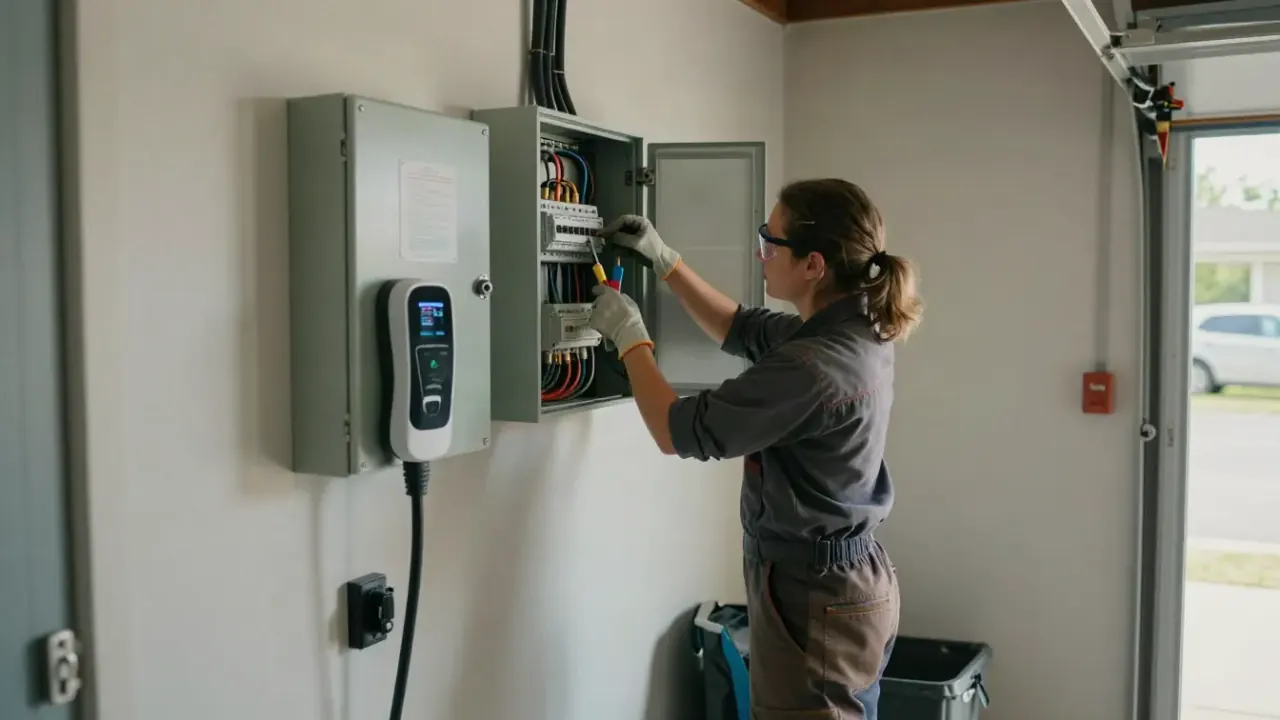
Your electrical panel can handle an EV charger if its total load - including the new 40 to 50 amp draw - stays within 80% of its rated capacity. In most Redondo Beach homes, that means a 200 amp panel with a few open breaker slots is ready to go, while a 100 amp panel or a full panel will need an upgrade or a load management device.
We install EV chargers across Redondo Beach every week, and the panel question comes up on nearly every job. This guide walks you through how to check your own panel, what the numbers mean, and when to call an electrician before you buy a charger.
The Short Answer: It Depends on Your Panel's Capacity
Can your electrical panel handle an EV charger is a question that comes down to three numbers: your panel's amperage rating, your home's existing electrical load, and the amperage your new charger will draw. A Level 2 charger pulls 32 to 48 amps continuously, which is a significant addition to any home's electrical system.
The National Electrical Code (NEC) requires that a continuous load like an EV charger not exceed 80% of a circuit's capacity. For a 50 amp circuit, that means a maximum continuous draw of 40 amps. For a 60 amp circuit, it's 48 amps. This is why most Level 2 chargers are installed on a 40 to 60 amp dedicated circuit.
If your panel has the capacity to add that circuit without exceeding its total load calculation, you're in good shape. If not, you have options: a panel upgrade, a subpanel, or a load management device that pauses charging when other appliances are running.
We handle Panel Capacity and Load Assessment Redondo Beach CA for homeowners who want a definitive answer before they buy a charger. Our electricians run the numbers and tell you exactly what your panel can support.
How to Check If Your Panel Can Handle an EV Charger in Redondo Beach
How to check if your panel can handle an EV charger in Redondo Beach starts with a trip to your garage or exterior wall where the main service panel is mounted. Open the door and look for the main breaker at the top or bottom - it will have a number stamped on it, like 100, 125, 150, or 200.
That number is your panel's amperage rating. Here's what it means for EV charging:
- 100 amp panel: Usually too small for a 40+ amp EV charger without a load management device or an upgrade.
- 125 amp panel: Sometimes workable with a 32 amp charger and a load calculation that leaves enough headroom.
- 150 amp panel: Often sufficient for a 40 amp charger if your other appliances are gas.
- 200 amp panel: Almost always ready for a Level 2 charger with capacity to spare.
Next, count your open breaker slots. A 240V EV circuit requires a double-pole breaker, which takes up two slots. If your panel is full, you'll need a subpanel or a panel upgrade even if the amperage is sufficient.
Finally, look at what's already running on your panel. Electric ranges, electric dryers, central AC, pool pumps, and electric water heaters all draw significant power. The more electric appliances you have, the less capacity remains for an EV charger.
We see this constantly in older Redondo Beach neighborhoods like EV Charger Installation in North Redondo CA, where 1950s and 1960s homes often still have their original 100 amp panels. Adding a charger there almost always means a panel upgrade or a smart load management solution.
What Size Panel Do You Need for an EV Charger in Redondo Beach CA?
What size panel do you need for an EV charger in Redondo Beach CA? For most homes, a 200 amp panel is the practical answer. It gives you enough capacity for a 40 to 48 amp Level 2 charger plus your existing appliances, and it leaves room for future additions like a heat pump or a second EV.
Here's a quick reference for panel sizing:
- 100 amp panel: Not recommended for a dedicated 40+ amp EV circuit. Upgrade or use a 16-32 amp charger with load management.
- 150 amp panel: Workable for a 40 amp charger if your home has gas appliances and no pool or hot tub.
- 200 amp panel: The standard for new EV charger installations. Handles a 48 amp charger with room to spare.
- 320/400 amp panel: Needed for homes with multiple EVs, all-electric appliances, and high-demand loads.
A 200 amp panel upgrade in Redondo Beach typically costs $2,500 to $4,500 in 2026, including the new panel, breakers, permit, and labor. That's a significant investment, but it's often the only way to safely add a high-amperage EV charger to an older home.
If a full upgrade isn't in the budget, a subpanel can sometimes solve the problem. We install Subpanel Installation for EV Chargers Redondo Beach CA when the main panel has capacity but no open slots, or when the charger is far from the main panel and a subpanel reduces wire runs.
The Electrical Load Calculation Redondo Beach Homeowners Need
An electrical load calculation Redondo Beach homeowners need follows the NEC Article 220 method: add up all fixed appliances, general lighting, and the new EV charger, then apply demand factors to see if the total stays under your panel's rating.
Here's how a licensed electrician runs the numbers:
- General lighting load: 3 watts per square foot of living space. A 1,500 sq ft home = 4,500 watts.
- Small appliance and laundry circuits: 1,500 watts each for kitchen and laundry.
- Fixed appliances: Water heater (4,500W), dryer (5,500W), range (8,000W), AC (5,000W), etc.
- EV charger: A 40 amp charger at 240V = 9,600 watts continuous.
- Apply demand factors: The first 10,000 watts of general load counts at 100%, the rest at 40%. The EV charger counts at 100% because it's a continuous load.
If the total exceeds your panel's rating, you have three choices: upgrade the panel, install a load management device that sheds the EV charger when other loads peak, or reduce the charger's amperage. A 32 amp charger draws 7,680 watts instead of 9,600, which can make the difference on a 150 amp panel.
We run this calculation on every job before we quote a price. It's the only way to know for sure whether your panel can handle the load or needs an upgrade. If you're in a condo or HOA, the calculation also has to account for shared meter banks and association rules - we handle Condo and HOA Charger Installation Redondo Beach CA for those situations.
100 Amp Panel EV Charger Redondo Beach CA: What Are Your Options?
A 100 amp panel EV charger Redondo Beach CA installation is possible, but it requires careful planning. You cannot simply add a 40 amp charger to a 100 amp panel that's already serving an electric range, dryer, and central AC - the load calculation will fail every time.
Here are your realistic options:
- Load management device: A smart splitter or EVEMS (Electric Vehicle Energy Management System) monitors your panel's total draw and pauses EV charging when other appliances are running. This lets you keep your 100 amp panel and still install a 40 or 48 amp charger. Cost: $500 to $1,200 installed.
- Panel upgrade to 200 amps: The permanent fix. You get full charging speed, no load management quirks, and capacity for future upgrades. Cost: $2,500 to $4,500 in 2026.
- Lower-amperage charger: A 16 or 24 amp Level 2 charger draws less power and may fit within your existing capacity. You'll charge slower - about 12 to 18 miles of range per hour instead of 25 to 30 - but it works for many drivers.
- Subpanel with load sharing: In some cases, a subpanel fed from the main panel can isolate the EV circuit and use a load-sharing device to stay within capacity.
We install Level 2 Home Charger Installation Redondo Beach CA on 100 amp panels regularly using load management devices. It's a legitimate, code-compliant solution that costs far less than a panel upgrade.
What you should not do is let an unlicensed handyman add a 50 amp breaker to a 100 amp panel without running the calculation. That's how you get nuisance tripping, overheated breakers, and a real fire risk.
Common Mistakes When Adding an EV Charger
The most common mistake we see is skipping the load calculation entirely. Homeowners buy a 48 amp charger, hire someone to run a circuit, and then wonder why the breaker trips every time the dryer runs. The calculation takes 15 minutes and prevents thousands of dollars in rework.
Other mistakes we fix regularly:
- Using a 40 amp breaker for a 40 amp charger: The NEC requires the circuit to be rated at 125% of the continuous load. A 40 amp charger needs a 50 amp breaker and wiring.
- Installing a NEMA 14-50 outlet on a 40 amp circuit: The outlet is rated for 50 amps, but the circuit isn't. This is a code violation and a fire hazard.
- Ignoring voltage drop on long runs: If your charger is more than 100 feet from the panel, voltage drop can reduce charging speed and stress the charger. We upsize wire to compensate.
- Forgetting the permit: Redondo Beach requires an electrical permit for EV charger installations. Skipping it can void your insurance and create problems when you sell.
- Not checking panel brand: Some older panels - particularly Federal Pacific and Zinsco - are known fire hazards and should be replaced before adding any new load.
We pull permits and handle inspections on every job. If you want the paperwork handled for you, our Permit and Utility Rebate Help Redondo Beach CA service covers the application, inspection coordination, and any utility rebates you qualify for.
When to Call a Professional
Call a licensed electrician if you're not comfortable opening your panel, if your panel is full, if you have a 100 amp service, or if you see any signs of overheating - scorch marks, a burning smell, or breakers that trip repeatedly. These are not DIY situations.
We also get called when homeowners have already bought a charger and need it installed properly. If you're in that spot, we can assess your panel, run the load calculation, and tell you exactly what's needed. Our team handles everything from a simple NEMA 14-50 Outlet Installation Redondo Beach CA to a full panel upgrade with a Tesla Wall Connector.
If you're in an older home - especially in neighborhoods like EV Charger Installation in South Redondo CA where many houses date back to the 1940s and 1950s - it's worth having an electrician look at your panel before you buy anything. A 20-minute inspection can save you from buying a charger your panel can't support.
Frequently Asked Questions
Can my electrical panel handle an EV charger in Redondo Beach?
Yes, if your panel is 200 amps with open slots and your load calculation stays under 80% capacity. Most 100 amp panels need a load management device or an upgrade. We run the calculation for free on every estimate.
How do I know if my panel needs an upgrade for an EV charger?
You need an upgrade if your panel is 100 amps, if it's full with no open slots, if it's a recalled brand like Federal Pacific or Zinsco, or if the load calculation exceeds your panel's rating. A licensed electrician can tell you in about 20 minutes.
What size panel do I need for an EV charger in Redondo Beach CA?
A 200 amp panel is the standard for a 40 to 48 amp Level 2 charger. A 150 amp panel works for a 40 amp charger if you have gas appliances. A 100 amp panel needs load management or an upgrade.
How much does a panel upgrade for an EV charger cost in Redondo Beach?
Typical 2026 pricing for a 200 amp panel upgrade in Redondo Beach runs $2,500 to $4,500, including the panel, breakers, permit, and labor. A load management device costs $500 to $1,200 installed and lets you keep your existing panel.
Can I install an EV charger myself in Redondo Beach?
You can, but you'll need an electrical permit and an inspection. The work must meet NEC Article 625 and local code. Most homeowners hire a licensed electrician because the load calculation and permit process are easy to get wrong.
Get Help with EV Charger Installation in Redondo Beach
If you're not sure whether your panel can handle an EV charger, we'll tell you straight - no guesswork, no upsell. We assess your panel, run the load calculation, and give you a clear answer with upfront pricing.
Call Redondo Beach EV Charger Installation at (310) 294-5464 to schedule your panel assessment. We serve homeowners across Redondo Beach and the South Bay, and we handle the permit, the installation, and the inspection from start to finish.