Local GuidesPermits and Rebates
Do You Need a Permit to Install an EV Charger in California
Yes, California requires a permit for nearly every EV charger installation. Here's how the Redondo Beach permit process actually works in 2026.
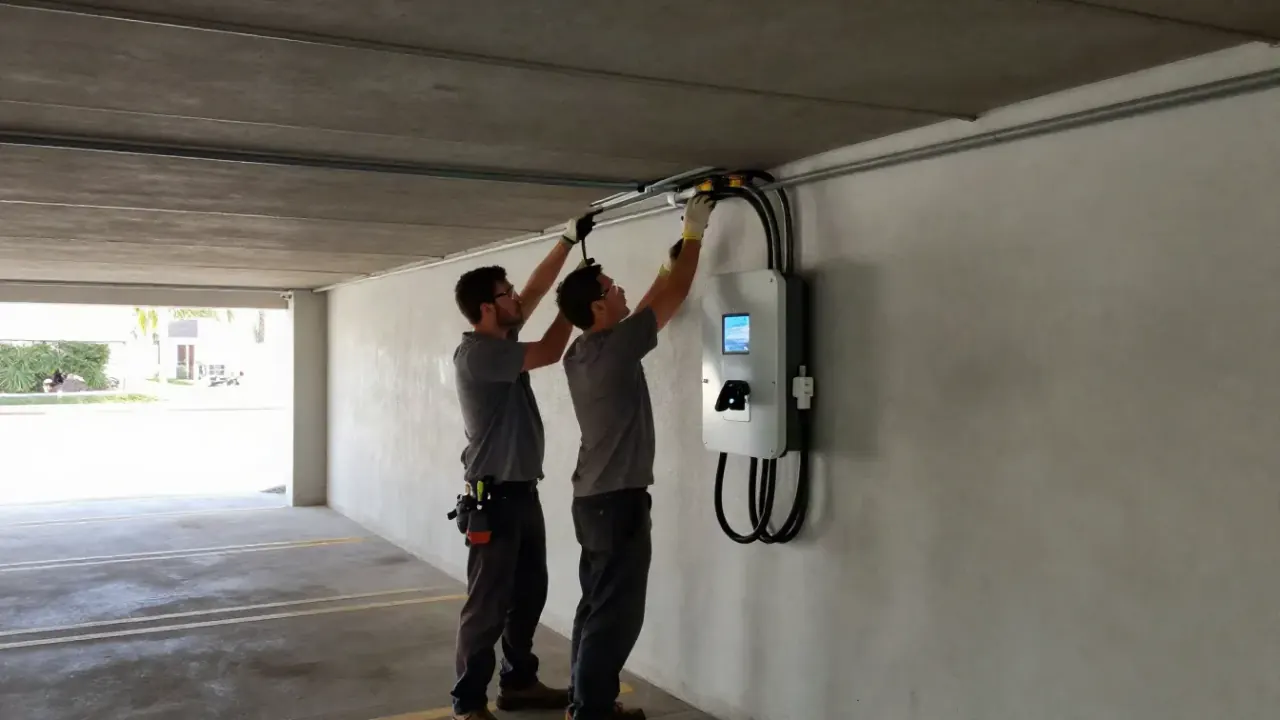
Yes, you need a permit to install an EV charger in California. Almost every 240-volt charger installation - whether it's a hardwired Tesla Wall Connector or a NEMA 14-50 outlet - requires a building permit from your local jurisdiction, and Redondo Beach is no exception. A permit for EV charger installation in Redondo Beach is issued by the city's Building and Safety Division, and the work has to be inspected before it's signed off.
What follows is the real process: what California code requires, what Redondo Beach actually asks for, what it costs in 2026, and who is legally responsible for pulling the paperwork. If you're weighing whether to skip the permit, the short answer is don't - we'll show you exactly why.
Do You Need a Permit to Install an EV Charger in California?
A permit to install an EV charger in California is a formal authorization from your city or county that confirms the electrical work meets current code before it's energized. The California Electrical Code, which is based on the National Electrical Code and adopted statewide, treats a 240-volt EV charging circuit as new electrical work - and new circuits require a permit.
The only realistic exceptions are plugging a portable Level 1 charger into an existing 120-volt outlet, or swapping a like-for-like Level 2 unit on a circuit that was already permitted and inspected. Anything that adds a new breaker, runs new conduit, or upgrades your panel needs a permit. That covers roughly 95% of the installs we do.
California also has a state law - often called the EV charging permit streamlining statute - that requires cities to process EV charger permits administratively and on an expedited basis. Redondo Beach complies with this, which is why most residential EV permits here move faster than a typical kitchen remodel permit.
Why California Requires a Permit for EV Charger Installation
California requires an EV charger permit because a 240-volt charging circuit draws 32 to 48 amps continuously for hours at a time - a load profile that exposes weak wiring, undersized breakers, and overloaded panels in a way ordinary household circuits never do.
A dryer or range cycles on and off. An EV charger runs flat-out for six to ten hours overnight. That sustained draw is why the code treats it as a continuous load and requires the circuit to be sized at 125% of the charger's rated amperage. A 40-amp charger needs a 50-amp circuit. A 48-amp charger needs a 60-amp circuit.
There's also a fire-safety angle that matters in older beach cities housing stock. Redondo Beach has a lot of homes built between 1940 and 1975 with 100-amp service panels and aluminum branch wiring in a few pockets. Adding a 48-amp continuous load to a panel that's already near capacity is how you get nuisance trips, hot breakers, and worse. The permit forces a load calculation before anyone touches a wire.
Finally, the permit creates a paper trail. If you sell the house, an unpermitted charger circuit is a disclosure issue. If your insurance carrier asks about the electrical work after a claim, an unpermitted 240-volt circuit is a problem you don't want.
California EV Charger Permit Requirements for Homeowners
California EV charger permit requirements for homeowners come down to three things: a completed application, a load calculation, and a site plan. Redondo Beach's Building and Safety Division asks for all three on residential EV charger permits.
Here's what actually goes into the packet:
- Permit application with the property address, owner information, and scope of work.
- Electrical load calculation (a completed panel schedule showing existing loads plus the new EV circuit).
- Site plan or electrical diagram showing charger location, circuit path, breaker size, wire gauge, and conduit routing.
- Equipment spec sheet for the charger - UL-listed, and for hardwired units, the manufacturer's installation manual.
- Contractor license and insurance if a licensed electrician is pulling the permit on your behalf.
You do not need a structural engineer, an architect, or a coastal development permit for a standard garage or carport charger. If your charger is going on an exterior wall facing a public street in certain zones, the city may ask about placement, but that's a rare edge case.
One thing homeowners consistently miss: the load calculation has to reflect your actual panel, not a generic estimate. If your panel is a 100-amp service and the math comes out over capacity, the permit will get flagged and you'll need a panel upgrade or a load-management device before the permit is issued. We handle that math up front so there are no surprises at the counter.
The Redondo Beach EV Charger Installation Permit Process, Step by Step
The Redondo Beach EV charger installation permit process runs through the city's online permitting portal, and for a straightforward residential install it typically takes three to ten business days from submission to issued permit.
- Submit the application online through the city's permit portal with the load calculation, site diagram, and equipment specs attached.
- Plan review. Most residential EV permits are reviewed administratively - no public hearing, no planning commission. Simple installs often get same-week approval.
- Permit issued and fees paid. You or your contractor pays the fee, and the permit is active.
- Installation. The electrician runs the circuit, mounts the charger, and terminates the connections.
- Inspection. A city inspector verifies the breaker size, wire gauge, grounding, GFCI protection, and charger mounting. This is usually a 15-to-30-minute visit.
- Final sign-off. Once the inspector signs off, the circuit is legal and your utility rebate paperwork can move forward.
If your install is in an older home in North Redondo EV Charger Installation territory - a lot of 1950s tract homes with original 100-amp panels - plan on the load calculation being the slowest part. We usually know within an hour of looking at your panel whether you'll sail through or need a subpanel.
For condos and townhomes, the process adds a step: HOA approval. The city won't issue the permit without a signed authorization from the association, and California law (Civil Code 4745) limits what an HOA can charge or require. We walk owners through that paperwork as part of our Condo and HOA Charger Installation Redondo Beach CA service.
How Much Does an EV Charger Permit Cost in Redondo Beach?
An EV charger permit in Redondo Beach costs roughly $150 to $400 for a standard residential installation in 2026, depending on the valuation of the work and whether a panel upgrade is included.
Here's how the numbers break down:
- Basic residential EV charger permit: $150-$250.
- Permit plus subpanel or panel upgrade: $250-$400.
- Commercial or multi-unit permit: $400-$1,200, depending on circuit count.
- Inspection fee: usually bundled into the permit, occasionally $50-$100 separately.
Those are city fees only. The installation itself - labor, wire, conduit, breaker, and the charger - is a separate cost. A typical Level 2 install in Redondo Beach runs $800 to $2,000 for labor and materials, more if a panel upgrade is needed.
What you should not do is let a contractor talk you into skipping the permit to save $200. An unpermitted 240-volt circuit can cost you thousands to legalize later, and it can void your homeowner's insurance if a fire traces back to it. The fee is the cheapest part of the job.
There's an upside, too: a permitted installation is what unlocks utility rebates. Southern California Edison and LADWP-adjacent programs both require proof of a permitted, inspected install. If you want help navigating that, our Permit and Utility Rebate Help Redondo Beach CA service handles the paperwork end to end.
Who Pulls the Permit for EV Charger Installation in Redondo Beach?
The licensed electrical contractor pulls the permit for EV charger installation in Redondo Beach - not the homeowner, and not the charger manufacturer. In California, the permit has to be pulled by the person or company doing the work, and that person has to hold a valid C-10 electrical contractor license.
This matters for two reasons. First, if a handyman or a general contractor offers to install your charger without pulling a permit, walk away. They're either unlicensed for this scope or planning to do unpermitted work. Second, if you pull the permit yourself as a homeowner, you're legally certifying that you did the work - which means you own the liability if something goes wrong.
When we pull the permit, the sequence is simple: we submit the application, we handle the plan review questions, we schedule the inspection, and we meet the inspector on site. You sign the application as the property owner and that's the extent of your involvement.
We do this across the beach cities every week, from South Redondo EV Charger Installation jobs near the pier to installs in the Hollywood Riviera. The process is the same whether you're in a single-family home or a condo - only the HOA step changes.
What to Watch Out For
The most common mistake we see is homeowners hiring the cheapest bid and discovering later that no permit was ever pulled. The second most common is a load calculation done on the back of a napkin.
Watch for these:
- No permit mentioned in the quote. If the bid doesn't list a permit fee, ask directly. A legitimate quote includes it.
- "You don't need a permit for a plug-in charger." False if a new 240-volt circuit is being added. The plug-in versus hardwired distinction doesn't change the permit requirement.
- Load calculation skipped. If nobody looked at your panel's main breaker rating and existing loads, the install is a gamble.
- No GFCI protection. The code requires GFCI protection on EV charging circuits in most residential configurations. Inspectors check for it.
- Undersized wire. A 48-amp charger needs 6-gauge copper at minimum for a short run. Longer runs need larger wire. Cheap installs cut this corner.
- Charger not UL-listed. Some imported units lack UL or ETL listing. Redondo Beach will not approve them.
One more: if your home was built before 1980 and still has the original panel, get a Panel Capacity and Load Assessment Redondo Beach CA before you buy a charger. Knowing whether you have 40 amps of headroom or none changes which charger you should buy.
When to Call a Professional
Call a licensed electrician when your install involves anything beyond plugging a Level 1 charger into an existing outlet. That means any new 240-volt circuit, any hardwired charger, any panel work, and any install where you're not certain your service can handle the load.
Redondo Beach EV Charger Installation handles the whole job - permit application, load calculation, circuit run, charger mounting, inspection, and rebate paperwork. We're a licensed electrical contractor, so the permit gets pulled in our name and the inspection is our responsibility to pass. You get a legal, inspected circuit and a charger that's ready to use the day we leave.
If you're in a condo or HOA, call us before you buy the charger. The HOA approval step is easier to handle up front than to untangle after the fact.
Frequently Asked Questions
Do I need a permit for an EV charger in Redondo Beach CA?
Yes. Redondo Beach requires a building permit for any new 240-volt EV charging circuit, whether hardwired or a NEMA 14-50 outlet. The only exception is plugging a portable Level 1 charger into an existing 120-volt outlet. Permits are issued by the city's Building and Safety Division and require an inspection.
How much does an EV charger permit cost in Redondo Beach?
Expect $150 to $400 for a standard residential EV charger permit in 2026. A basic install runs $150-$250; adding a subpanel or panel upgrade pushes it to $250-$400. Commercial and multi-unit permits range from $400 to $1,200 depending on circuit count.
Who pulls the permit for EV charger installation in Redondo Beach?
The licensed electrical contractor doing the work pulls the permit. In California, permits must be pulled by the licensed C-10 electrical contractor performing the installation. If you pull it yourself as a homeowner, you're certifying you did the work and you carry the liability.
How long does the Redondo Beach EV charger permit take?
Most residential EV charger permits in Redondo Beach are issued in three to ten business days. Simple installs with a clean load calculation often get same-week approval. The inspection itself is typically a 15-to-30-minute visit scheduled after the work is complete.
Can I install an EV charger without a permit in California?
Not legally for any new 240-volt circuit. California Electrical Code requires a permit for new EV charging circuits, and unpermitted work can void insurance, complicate a home sale, and disqualify you from utility rebates. The permit fee is the cheapest part of the job.
Get Help With EV Charger Installation in Redondo Beach
If you want the permit handled correctly the first time, we do this every week across Redondo Beach and the surrounding beach cities. Call Redondo Beach EV Charger Installation at (310) 294-5464 and we'll walk you through the process for your specific panel and property.